Cost of buying a house in Amsterdam: build your budget
A clear overview of the costs of buying a house in Amsterdam, from the purchase price and own funds to transfer tax, the notary, owners’ association and monthly costs.

TL;DR
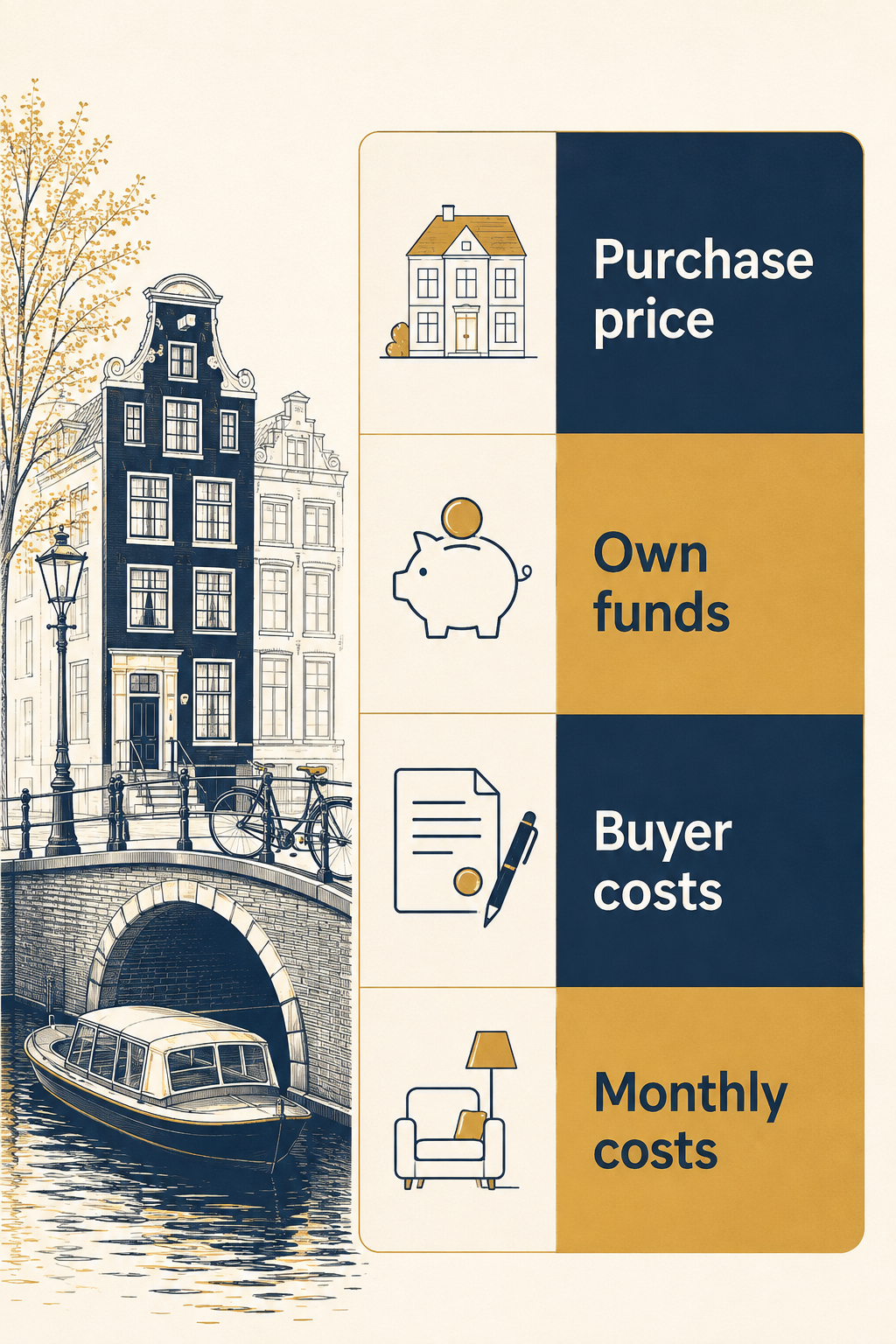
The cost of buying a house in Amsterdam has four layers: the purchase price, own funds needed outside the mortgage, one-off buyer costs and recurring housing costs. There is no single figure for every buyer. Build the budget around your home, intended use and financing.
Before making an offer, include:
- the purchase price and the part financed by a mortgage;
- own funds for the difference, furnishing and a cash buffer;
- transfer tax and the deeds or services your purchase needs;
- mortgage payments, owners’ association charges, insurance, municipal costs, energy and maintenance;
- ground rent or other leasehold terms attached to the home.
A buyer can compare Dutch home-buying costs beyond Amsterdam with the city-specific fees before separating transfer tax, professional charges and monthly housing costs.
Your local budget also needs a place in the wider sequence: the buying a house in Amsterdam step by step process connects each cost to the viewing, offer, contract and transfer stage.
Quick cost cards
Purchase price
- Paid
- At transfer under the contract.
- Amount changes with
- Agreed price and movable items.
Own funds
- Paid
- Before and around the purchase.
- Amount changes with
- Mortgage room, savings, costs and buffer.
Transfer tax
- Paid
- At the legal transfer.
- Amount changes with
- Use of the home, age, price and statutory conditions.
Notary and deeds
- Paid
- Around contract, mortgage and transfer.
- Amount changes with
- Services selected and the file.
Mortgage
- Paid
- Monthly and sometimes at signing.
- Amount changes with
- Loan, interest, term and conditions.
Owners’ association
- Paid
- Monthly for an apartment.
- Amount changes with
- Budget, reserve fund and maintenance plans.
Leasehold
- Paid
- Under the leasehold terms.
- Amount changes with
- Ground rent, period, buyout or transition.
Living and maintenance
- Paid
- During ownership.
- Amount changes with
- Energy, insurance, municipal costs and work.
These cards are a starting point. Some amounts are due before transfer and others later. Ask whether each item is one-off, monthly or linked to a choice.
What are you paying for?
Purchase price and own funds
The purchase price appears in the purchase contract. The mortgage covers part of it when the lender approves the loan. The difference comes from your own funds. You also need money for costs that do not fit inside the loan and for a buffer after receiving the keys.
Leave room for work you already noticed during the viewing. Painting, energy upgrades or repairs in an apartment can make the first months more expensive than the mortgage payment suggests.
Transfer tax
For 2026, the Dutch Tax and Customs Administration lists a 2% rate when you use the home as your main residence. Its rate page lists 8% for a property that will not be a main residence and 10.4% for other immovable property. The Dutch transfer-tax rates distinguish a main residence from other uses, so place the correct line beside your purchase price.
The intended use of the property is a decision point. A home for your own occupation and a home for letting do not automatically fall under the same rate. Check your situation before placing a percentage in the budget.
One-off services and deeds
Rijksoverheid lists the transfer deed, mortgage deed, valuation, building inspection, mortgage advice and estate-agent fees among possible purchase costs. The services you need depend on the home, financing and agreements you make. Rijksoverheid’s home-buying cost categories include those items.
Ask each professional for an amount including VAT and for a list of what is included. That makes an estimate easier to compare.
Apartment, owners’ association and maintenance
With an apartment, you usually pay a contribution to the owners’ association. The budget covers shared insurance, cleaning, management and reserves for maintenance. A monthly amount does not show whether the reserve fund is sufficient.
Read the budget, annual accounts, meeting minutes and multi-year maintenance plan when available. A planned roof, facade or foundation project can lead to a higher contribution or an extra payment.
Amsterdam leasehold
With leasehold, check the ground rent, period, terms, buyout, transition and possible arrears. The Amsterdam purchase records for ground rent and buyout help you test the yearly cost and the effect of a future change.
Place the annual or monthly amount beside the mortgage calculation. Check which period the figure covers and which arrangements can matter if the leasehold changes or the home is sold.
Which factors change the result?
Intended use
A main residence, letting property and second home can receive different tax treatment. Write down who will use the home and from when. Ask a tax adviser to confirm the position when your plans differ from owner occupation.
Age and exemption
For 2026, Rijksoverheid describes a one-time starter exemption for buyers aged 18 through 34 who meet the conditions, including a home-value ceiling of €555,000 and owner occupation. The 2026 starter transfer-tax exemption conditions cover age, home value, owner occupation and previous use of the exemption.
Age alone does not settle the exemption. Check the value, intended use, previous use of the exemption and the declaration required at transfer.
Purchase price and mortgage
A higher purchase price can increase transfer tax. A larger loan can increase the monthly payment and total interest. The mortgage adviser also considers income, employment terms, debts, interest and the value of the home.
Property type and condition
An apartment, canal house, listed property or home with foundation or damp questions can need different checks and more investigation. An inspection, valuation or specialist opinion can add a fee. The benefit is information before the decision is fixed.
Leasehold and owners’ association
Ground rent and the owners’ association charge can both continue alongside the mortgage. Check whether an amount is fixed, can change or already appears in a municipal or association decision. Request the records instead of relying on a spoken figure.
Timing
A bidding deadline can leave little time to request records. A financing condition creates room that needs to be written into the contract. Speak with your adviser as soon as a home becomes a serious option.
Three planning scenarios
These figures are not a quote. They show which questions belong in your own budget.
Scenario A: main residence without the exemption
- Situation: you will occupy the home and do not meet the starter-exemption conditions.
- Needed for the estimate: purchase price, the 2026 2% main-residence rate when it applies to your facts, deeds, financing and a buffer.
- Check next: ask what the mortgage adviser, valuer, notary and estate agent charge.
- What can change it: property type, financing, owners’ association, leasehold and maintenance.
Scenario B: buyer checking the starter exemption
- Situation: you are aged 18 through 34 and will live in the home.
- Needed for the estimate: check the €555,000 value ceiling in 2026, the other conditions, own funds, services and monthly costs.
- Check next: ask the notary which declaration is required and whether you used the exemption before.
- What can change it: age at transfer, home value, buying together and previous ownership.
Scenario C: a home that will not be your main residence
- Situation: you buy for letting, temporary use or another purpose.
- Needed for the estimate: check the applicable rate, financing, maintenance, insurance, management and local rules.
- Check next: have the tax treatment and letting permissions confirmed.
- What can change it: actual use, transfer date and legal changes.
Compare estimates fairly
Ask the notary, mortgage adviser, valuer, building inspector and estate agent the same questions:
- Is the amount inclusive of VAT?
- Which work is included?
- Which records should I send?
- Are outside fees, urgent-work fees or travel costs separate?
- How long does the price remain valid?
- When will I receive the result or deed?
- What happens if the assignment changes?
- Which costs can return after the first appointment?
Put the answers in one comparison sheet. A low first price can describe a smaller assignment, while a higher figure can include more checking or explanation. Compare the work first and the total second.
How to avoid unnecessary extra cost
Request records before arranging a paid check. Give the professional the purpose, address and documents you already have. Ask for an all-in estimate and have extra work confirmed before it starts.
A low fee is not a reason to remove an inspection, legal check or financing step that your situation needs. The saving can disappear when a missing record causes another appointment or a delay.
Request a tailored estimate
Include at least:
- the address and property type;
- the purchase price or range;
- whether you will live in the home;
- your age when a starter exemption may apply;
- leasehold details and owners’ association records already available;
- the planned transfer date;
- the purpose of the valuation, advice, deed or inspection.
Ask for three lines in reply: the amount including VAT, what is included and which event could change the estimate.
Timing and documents
Start the budget when a home catches your attention. Before the offer, check which records are available. After acceptance, the purchase contract, financing, deposit or bank guarantee, notary documents and transfer often follow.
Keep the estimate, engagement letter, invoice and final deed with the home records. Write down the date on which a rate or exemption was checked. That makes a later recalculation faster.
Questions about buying costs
How much are buyer costs?
There is no fixed amount for every purchase. The costs depend on transfer tax, the home, services, financing, owners’ association, leasehold and intended use. List each item and have dated parts confirmed.
Does every buyer pay 2% transfer tax?
The 2% rate applies to a home you will use as your main residence when the conditions are met. The Dutch Tax and Customs Administration lists other rates for a property that will not be a main residence and for other immovable property.
Can I use the starter exemption?
In 2026, buyers aged 18 through 34 may qualify for the one-time exemption for a home worth up to €555,000 when the other conditions are met, including owner occupation. Check every condition with Rijksoverheid and the notary.
Is leasehold a one-off cost?
That depends on the terms. Ground rent can return, while buyout or transition can create a different financial choice. Read the leasehold contract and have the effect on your financing confirmed.
Which owners’ association records should I request?
Ask for the monthly contribution, budget, annual accounts, reserve fund, meeting minutes and planned maintenance. Check whether an extra payment has been discussed.
How much own money do I need?
It depends on mortgage room, purchase price, buyer costs, furnishing and the buffer you keep. Ask the lender which items cannot be paid from the loan and keep funds for living in the home after transfer.
Are mortgage advice and a valuation always needed?
That depends on your financing and the home. A lender may require a valuation and certain records. Ask which step your loan requires and which service you are choosing for extra reassurance.
Checked on 3 September 2026
The rates and exemption conditions in this explanation were checked against the Dutch Tax and Customs Administration and Rijksoverheid pages linked in the text. The Amsterdam leasehold points were compared with the municipality’s buying information. Check those pages again when your purchase takes place later, because rates and conditions can change.
Place your purchase price, own funds, one-off costs and monthly costs side by side. Have current rates and contract items confirmed before fixing an offer or mortgage.
Read the buying process →